Church Governance Overview
The Church is governed through four Courts as established by Article 7(2) of the EPCG Constitution 2020. This hierarchical structure ensures effective governance from the local congregation level to the highest decision-making body of the Church.
The Four Courts Hierarchy
From lowest to highest, these courts provide comprehensive governance across all levels of church operation:
The Congregational Session
The government of the Local Congregation, comprising Agents (Ministers and Catechists), Presbyters, and other members as provided for by Article 8(6) of the EPCG Constitution. The Agent-in-Charge chairs the Session meetings.
The District Session
Consists of a number of Congregations in the Districts and is led by a District Minister. It deals with matters affecting the Congregations within the District, with functions provided for in Article 9(3).
The Presbytery Synod
Made up of members stipulated in Article 10(6a) of the EPCG Constitution, with functions provided for by the same article in 10(8). It deals with matters affecting the districts in its jurisdiction.
The General Assembly
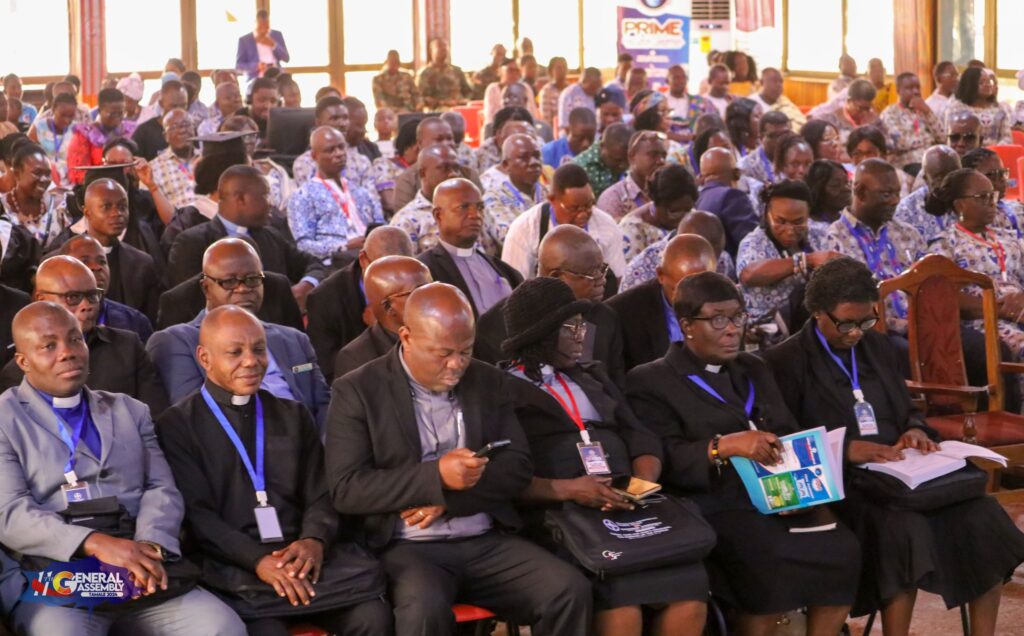
Adopted in 2008 to replace the Synod system, the GA serves as the highest decision-making body of the Church, formulating policies to be implemented throughout the Church structure.
General Assembly Transformation
The Church adopted the General Assembly concept in 2008, replacing the Synod system. This transformation brought significant changes to church governance, elevating the decision-making process and enhancing presbyterial autonomy.
Key Distinguishing Features
- Under the GA, Presbyteries have a higher level of autonomy than under the previous Synod system
- Representatives from Presbyteries to the GA are designated as Commissioners rather than delegates
- The GA meets bi-annually to receive comprehensive reports from all Presbyteries
- Between Assemblies, the Church is managed by the General Assembly Executive Council (GAEC)
- A Standing Committee meets regularly to address matters requiring attention between GAEC meetings
Administrative Structure
The administration of the Church is organized into eleven specialized Departments per Article 37(4) of the Church’s 2020 Constitution. Each Department is led by a Director who reports to the General Assembly through the Clerk of the General Assembly.
Coordination Function: The Departments coordinate the activities of various Committees throughout the Church, ensuring streamlined operations and effective implementation of policies.
- Internal Audit
- Finance
- Programmes,Ecumenical and Social Relations
- Development, Environment and Relief
- Administration and Human Resource Management
- Estate
- Music and Worship
- Mission and Evangelism
- Education
- Business Development